How curl Grew From httpget Into Network Infrastructure
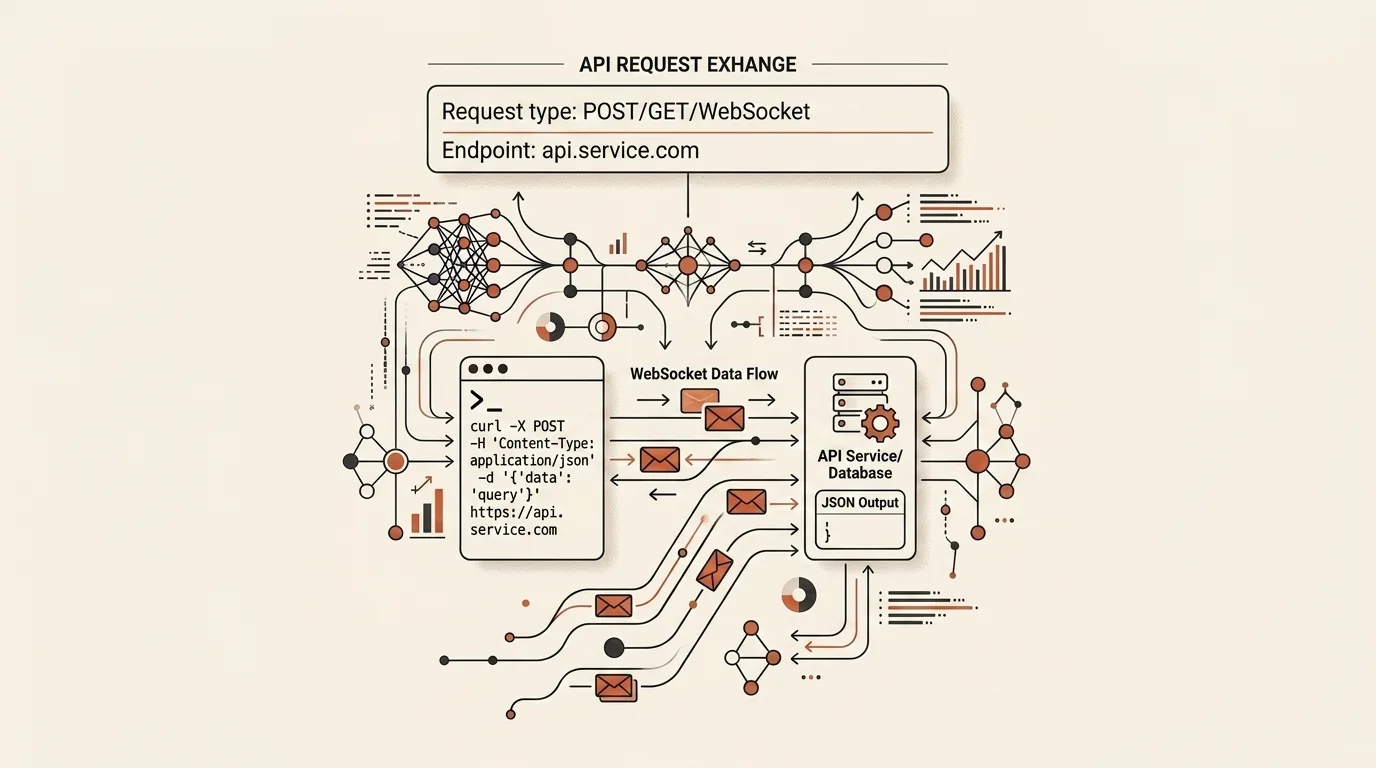
A curl command appears in countless API guides because it is easy to paste into a terminal, use for a quick request, and later translate into application code. The familiar command has a longer story behind it. The project began as a small program for retrieving data from the internet, changed names as its scope expanded, and eventually gained the libcurl library, which placed the same transfer engine inside many other programs.
An IRC bot and someone else's source code
In late 1996, Swedish developer Daniel Stenberg was writing an IRC bot for an Amiga channel on EFnet. He wanted to add currency conversion, and the exchange rates were already available on the web, so the missing piece was a way to retrieve the page automatically. Rather than build an HTTP client from scratch, Stenberg used the open-source HttpGet, whose version 0.1 had been released by Brazilian developer Rafael Sagula on November 11, 1996.
Stenberg made the changes his bot needed, and version 0.2 with his additions followed on December 17. He soon became the project's maintainer, while the original practical problem continued to shape the software: it needed to retrieve data from several kinds of internet source, not demonstrate a single protocol. This sequence is recorded in curl's official project history.
Why httpget became urlget and then curl
The name httpget described the early program accurately while it mainly handled HTTP downloads. Support for Gopher and FTP made that description too narrow, so the project became urlget in August 1997: it now addressed resources by URL instead of only fetching HTTP pages. FTP uploads and HTTP POST support soon made the word “get” misleading as well, because the tool was no longer limited to receiving data.
On March 20, 1998, Stenberg released curl 4, preserving the version sequence from the earlier names. The new name was associated with “client for URLs,” while the word curl also visibly contained URL. The reasoning behind the rename mattered more than the label itself: every added protocol, authentication method, and transfer mode was turning a small downloader into a general-purpose client useful well beyond the original IRC bot.
The project accumulated practical capabilities quickly during the late 1990s. SSL, cookies, Telnet, builds for several operating systems, and Linux packages all followed. Users now had a capable command, but it was still a separate program. Another product either had to launch a curl process or solve the same networking problems again inside its own code.
libcurl turned a program into a building block
In the spring of 2000, curl underwent a substantial internal redesign to provide a library interface, and version 7.1 delivered the first non-beta libcurl API that August. A third-party PHP binding appeared in the same month. This was more consequential than adding one more protocol because developers could now embed the transfer engine in their own software and control it through library calls.
The command-line tool and library solve related but distinct problems. The CLI suits a person, shell script, or build system: a command describes a transfer, runs, and returns a result. libcurl lives inside a long-running application, where the program controls connections, data callbacks, concurrent operations, and error handling. It does so without separately implementing URL handling, proxies, authentication, TLS, cookies, and the details of every supported protocol.
That library is what carried curl far beyond the terminal. An application user may never see the name even though libcurl performs its transfers. The command-line version also spread as a standard system utility, but an exact installation count is impossible because curl ships with operating systems, travels through many mirrors, and arrives as a component of other software. Nor can the project's longevity be reduced to one author. Stenberg remains its lead developer, while an international community has long shared development, testing, and issue triage.
WebSocket addresses a different networking problem
It is useful to picture an HTTP request as a completed operation: the client supplies a method, address, headers, and perhaps a body, then the server returns a response. Modern HTTP can reuse connections and stream data, so the distinction from WebSocket is not simply that “HTTP closes while WebSocket stays open.” The interaction model is the more important difference.
RFC 6455, published by the IETF in December 2011 and authored by Ian Fette and Alexey Melnikov, standardized a protocol for two-way messaging between a browser client and server. A connection starts with an HTTP/1.1 request containing Upgrade: websocket and Connection: Upgrade. Once the server accepts that transition, communication continues as WebSocket frames over the same TCP connection, and either peer can send messages independently.
This model suits chats, collaborative editors, live dashboards, and other interfaces where new data does not arrive only in response to another user request. WebSocket does not replace an HTTP API. Applications commonly use ordinary requests to load and modify resources, while reserving a persistent connection for events that should arrive without repeatedly polling the server.
What API Sandbox actually does
API & Web Sandbox places these two everyday jobs in adjacent tabs. cURL Converter does not execute the request or attempt to reproduce all of curl. It parses the URL, a method supplied with -X or --request, headers from -H, several --data forms, Basic Auth through -u, and an explicit --url. It then translates that request structure into one of twenty outputs, including Fetch API, Axios, native Node.js, Python, PHP, Go, C#, Java, Swift, Rust, HTTPie, Wget, PowerShell, and a Postman collection.
An unknown option produces a visible error, although several command-line flags such as --location, --insecure, --silent, --include, --verbose, and --compressed are skipped because they describe curl execution or output rather than the core request structure. The result should therefore be treated as a code starting point. The converter does not carry over file uploads and multipart forms, cookies, client certificates, proxies, advanced authentication schemes, or every shell behavior. Generated browser fetch code is also subject to CORS and other browser restrictions even when the original command works from a terminal.
WebSocket Tester, by contrast, opens a real connection through the browser's WebSocket API. It accepts a ws:// or wss:// address, sends text messages, shows the time and direction of each event, retains the latest 200 log entries, and can format JSON. Binary messages are identified without displaying their contents, while custom headers, subprotocol selection, and frame-level controls are not exposed. A page loaded over HTTPS should also use wss://, since the browser may block an insecure WebSocket as mixed content.
For a quick check, paste a simple command using -X, -H, and -d into the converter, compare the generated variants, and notice which parts of the request survive in each language. In the second tab, connect to your own test WS/WSS server. The log will show the connection opening, sent messages, replies, and the close code without sending those details through an API Sandbox intermediary.
Related tools


Frequently asked questions
Who created curl and when?
Rafael Sagula released HttpGet 0.1 on November 11, 1996. Daniel Stenberg adapted it for an IRC bot, soon became its maintainer, and continued developing the project. After a period under the name urlget, the first curl release kept the existing version sequence and arrived as curl 4 on March 20, 1998.
What is the difference between curl and libcurl?
curl is a ready-made command-line program controlled by a user or script. libcurl is the library from the same project: an application links to it and uses the transfer features through an API without launching a separate process or implementing the networking itself.
Why did curl become so widespread?
The project combines portability, support for multiple protocols, and long-term compatibility. The command-line tool is useful in terminals and automation, while libcurl can be embedded in other software, so many people rely on the technology without ever typing a curl command.
What is WebSocket?
WebSocket was standardized in RFC 6455 in December 2011. A connection begins with an HTTP-compatible opening handshake, after which the peers exchange frames over TCP and can independently send messages in either direction.
What can API Sandbox do?
The converter parses the basic structure of a curl command: its URL, method, headers, body, and Basic Auth, then offers twenty code and export variants. WebSocket Tester opens a WS/WSS connection from the browser, sends text messages, and records an event log. It is a learning-oriented converter, not a complete implementation of every curl option or a specialized WebSocket client.

Author
Alex RelFullstack Engineer
In commercial development since 2011 — over 15 years. Author of two SaaS products, TeleGo.io and LingvoHabit.com. The articles here come out of real client and product work.